Microscope
Instrument for viewing objects invisible to the naked eye.

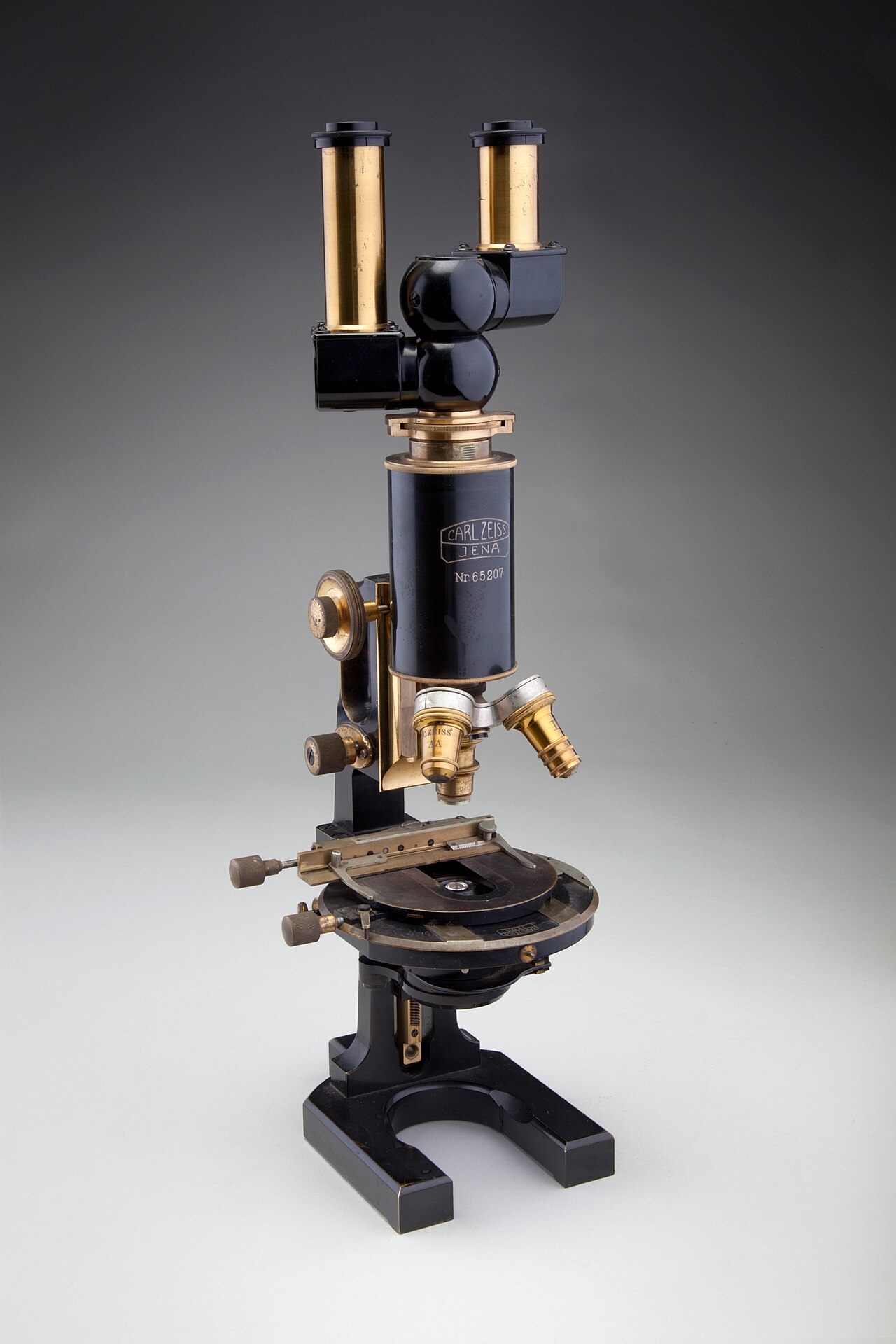
Chad Anderson, staff photographer for SFO Museum · CC BY-SA 2.0
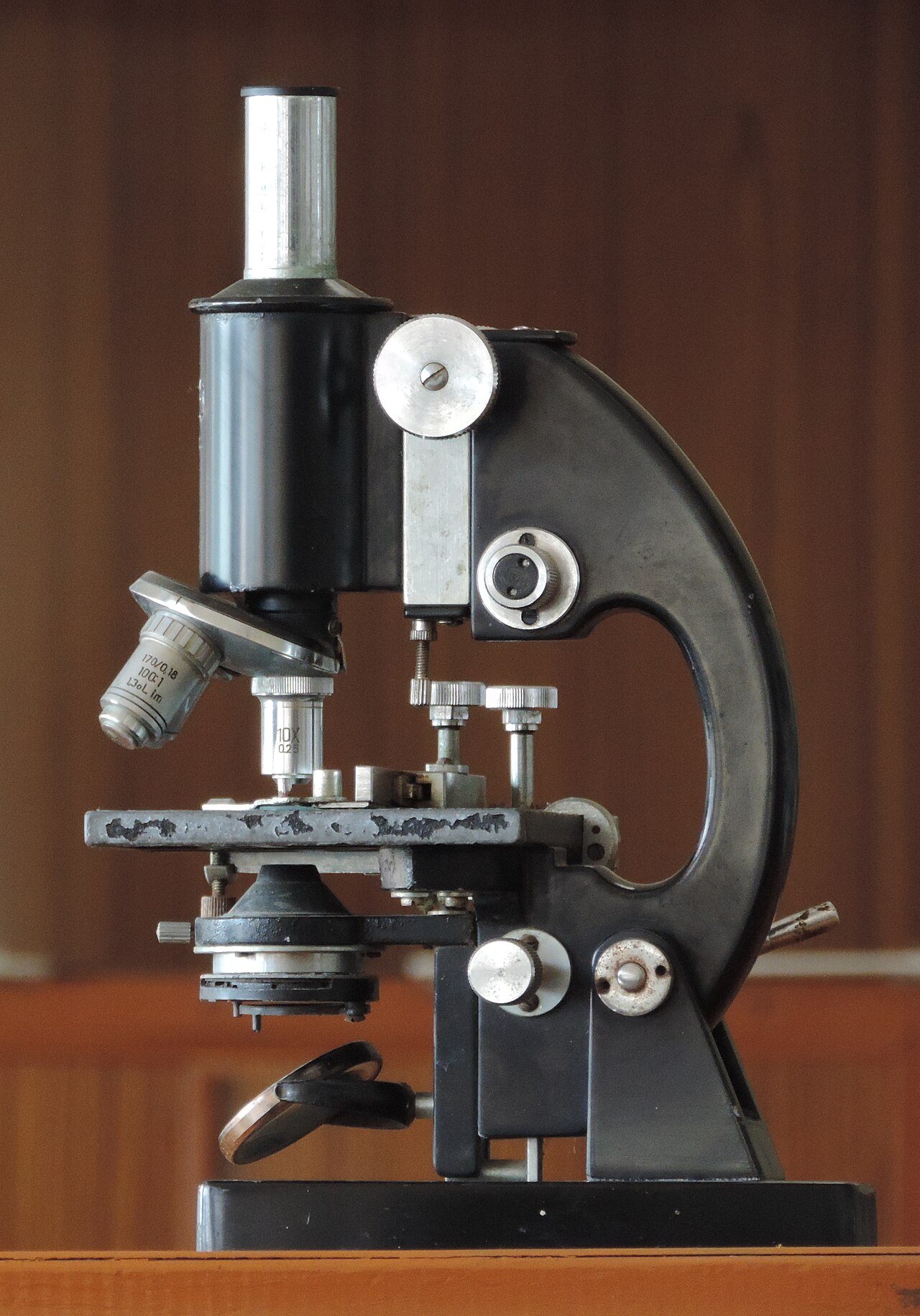
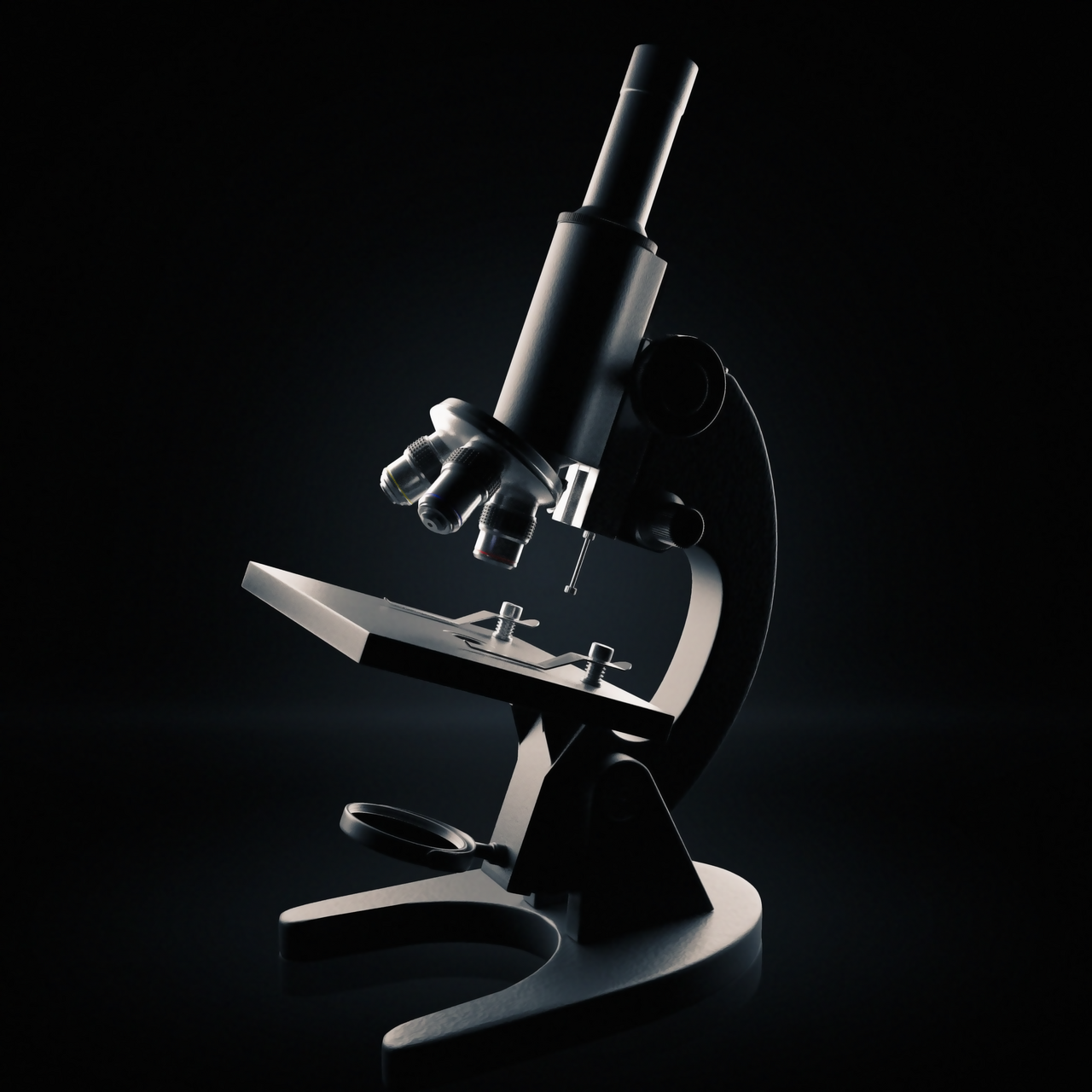
A microscope is a laboratory instrument used to examine objects too small to be seen by the naked eye. Microscopy, the science of investigating small objects and structures using a microscope, has been central to biology, medicine, and materials science. The most common and first invented type is the optical microscope, which uses lenses to refract visible light; other major types include fluorescence microscopes, electron microscopes, and scanning probe microscopes.
Lore & Background
The first commercial TEM came from Ernst Ruska at Siemens; the first commercial SEM was developed by Sir Charles Oatley and Ken Smith, marketed as the 'Stereoscan'. Fluorescence microscopy rose in the late 20th century, with techniques such as DAPI staining, immunofluorescence, and green fluorescent protein.
Reader's Guide
The microscope's significance lies in its ability to reveal structures and organisms invisible to the naked eye, fundamentally transforming biology, medicine, and materials science. The optical microscope, refined through Köhler illumination and phase contrast, enabled detailed study of living cells. Electron microscopes, using beams of electrons instead of light, allowed visualization of viruses and subcellular organelles without reagents. Scanning probe microscopes, based on quantum tunnelling, read forces between a probe and sample surface, enabling atomic-scale imaging. Fluorescence microscopy, with targeted chemical stains and fluorescent proteins, revolutionized molecular biology in the post-genomic era. The microscope remains an essential tool across scientific disciplines, with ongoing developments in probe technology and imaging techniques.
The Foundation of Measurement
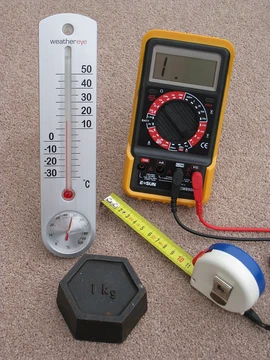
In the physical sciences, quality assurance, and engineering, measurement represents the act of quantifying and comparing physical properties of objects and events in the real world. The process depends on reference standards, whether objects or events, that serve as the units against which comparisons are made, ultimately yielding a numerical figure that connects the object being examined to its chosen standard. Measuring instruments, working alongside formal test methods that specify how each device should be operated, are the practical mechanisms through which these numerical relationships are extracted. Every such device, no matter how refined, carries some degree of inherent error and uncertainty in its readings. The scope of these tools is immense, stretching from basic implements like a simple ruler or stopwatch all the way to the extreme of electron microscopes and particle accelerators. In contemporary development, virtual instrumentation has become a widely adopted approach, reshaping how new measuring devices are conceived and built. This broad ecosystem underscores that measurement is not a single specialty but a foundational activity threading through virtually every branch of science and industry.
Measuring the Passage of Time
Throughout human history, the quantification of time has evolved dramatically. In earlier eras, the common instruments for tracking periods within a single day included sundials, water clocks, and hourglasses. In the modern era, the standard tools people reach for are clocks and watches, while the most demanding applications in precision science turn to atomic clocks for the highest achievable accuracy. Stopwatches continue to serve a practical role in certain sports contexts, capturing split-second intervals. Beyond simple duration, time plays a deeper structural role in physics: action, which accumulates energy over the full duration of a process, carries the same dimensional structure as angular momentum. A phototube, for instance, yields a voltage signal from which the quantized action of light—namely the Planck constant—can be derived, a result intimately linked to the photoelectric effect. These examples illustrate that time measurement is not merely about telling the hour but about underpinning some of the most fundamental relationships in physics, from the swing of a pendulum to the quantum behavior of photons.
Quantifying Energy and Power
Energy measurement occupies a distinct and practically vital branch of instrumentation. An electricity meter, for example, reads energy directly in kilowatt-hours, providing a straightforward figure of consumption. A gas meter operates on a different principle: it records the volume of gas drawn and then converts that figure into an energy value by multiplying it by the calorific value of the particular gas involved. This indirect method highlights how different energy forms demand different measurement strategies. Power, understood as the quantity of energy exchanged per unit time interval, or equivalently the flux of energy, sits one conceptual step above total energy. In the realm of flow measurement, devices such as mass flow meters, metering pumps, water meters, and gas meters capture the rate at which substances move through a system. The distinction between measuring a cumulative quantity of energy and measuring the rate at which energy flows is not merely academic; it shapes the design of everything from household utility meters to industrial process controls, connecting directly to how physical systems exchange energy over time.
The Vast Taxonomy of Physical Measurement
The landscape of measuring instruments extends far beyond any single domain, encompassing geometry, mechanics, and electrical science. In geometry, instruments range from simple rulers for length to planimeters for area, graduated cylinders and pipettes for liquid volume, and a rich array of angle-measuring devices including protractors, sextants, theodolites, and total stations. For three-dimensional orientation, gyroscopes determine direction while spirit levels and laser line levels establish horizontal reference. In mechanics, the taxonomy grows even denser: LIDAR and radar speed guns capture velocity, accelerometers record acceleration, balances and weighing scales quantify mass, force gauges and strain gauges measure force, barometers and manometers track pressure, and dynamometers and torque wrenches assess rotational effort. In electricity, electrometers probe charge, ammeters and galvanometers read current, and oscilloscopes visualize voltage waveforms. The electron microscope, cited among the most sophisticated instruments, sits within this enormous and interconnected family of devices, each translating an invisible physical quantity into a readable number.
Gallery
Frequently Asked Questions
What is Microscope (Science & Measurement 1-16)?
Microscope is the laboratory instrument designed to reveal objects and structures far below the threshold of human naked-eye vision. It stands as one of the most transformative tools ever built for scientific observation.
What are the main types of Microscope fans should know about?
The original and most widely used form is the optical (light) microscope, which bends visible light through glass lenses to magnify a specimen. Beyond that, the family branches into fluorescence microscopes, electron microscopes, and scanning probe microscopes, each exploiting a different physical principle to resolve finer detail.
How does the classic optical Microscope actually work?
It channels visible light through a series of carefully ground lenses that refract the beam, effectively stretching the image of a tiny specimen so the eye can resolve structures on the order of a few hundred nanometers. The objective lens does most of the magnification, while the eyepiece lens further enlarges the already-magnified image.
Why is Microscope considered foundational to biology and medicine?
Before microscopes, the entire microbial world, cellular architecture, and tissue-level pathology were simply invisible, so breakthroughs in germ theory, cell biology, and clinical diagnosis all trace back to what these instruments first revealed. It turned speculation about disease and life processes into something that could be directly observed and measured.
What's the key difference between an optical Microscope and an electron Microscope?
An optical microscope uses photons (visible light) and glass lenses, capping resolution around 200 nanometers, while an electron microscope fires a beam of electrons through electromagnetic lenses, pushing resolution into the sub-nanometer range. The trade-off is that electron microscopes require a vacuum chamber and cannot observe living, hydrated specimens the way a light microscope can.
More in Science & Measurement 1-16
Spotted an error? Know more?
This is a living reference — every entry is fact-audited, and reader corrections feed straight into our audit queue. Suggest an edit · See this site's audit record